

past lives
notes on unreality

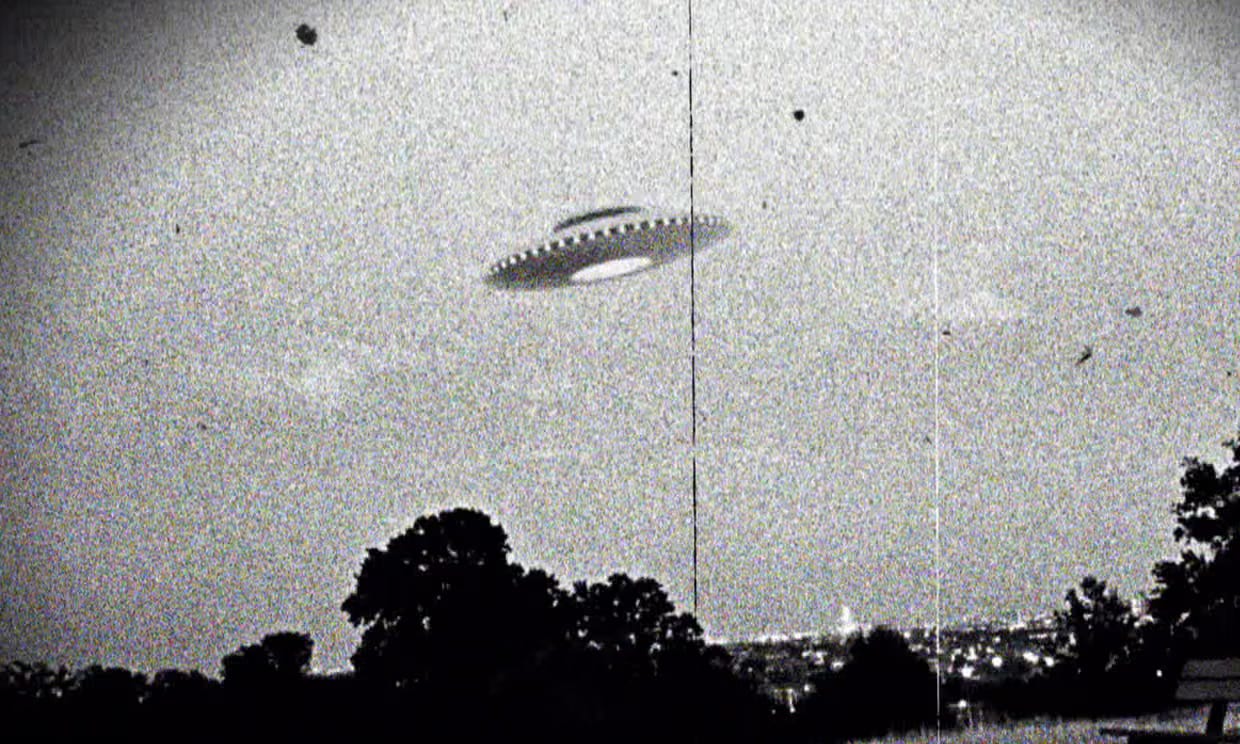
My friends are tickled by my interest in UFOs. This befuddles me because many of them can relate to my early Sunday School exposure to Old Testament beasts and supernatural phenomena, and my acceptance of said phenomena as truth, as compass. A couple months ago, the Pentagon released an array of UFO files, publicly accounting for 80 years of sightings and official government records. The Pentagon gave UFOs a sober new name, UAP (Unidentified Aerial Phenomena), hoping to strip it of its reputation of unseriousness.
The only thing truly nerve wracking about this, after disclosure, after the Congressional Hearings, after the now third batch of records organized on an official government site with videos, is that nobody seems to care. Perhaps overwhelmed and overburdened by an ever-sensational news cycle and the dopamine crashes of social media culture, the news has been treated almost like roadkill. The few who do slow down to look, never stop.
I believe in the potential of the things I was taught in Sunday School. I believe that UFOs or UAPs exist because how drastic (though how romantic) would it be if we were truly here in the wide infinite with nothing but each other to call home? I don’t think the Star Trek type UFOs have ever made sense to me. Our imaginations would prove amateur if that was all we assumed could be out there. But I’m realizing something about the supernatural elements of our existence that we choose to notice, and when and why and how we decide what’s allowed to be taken seriously.
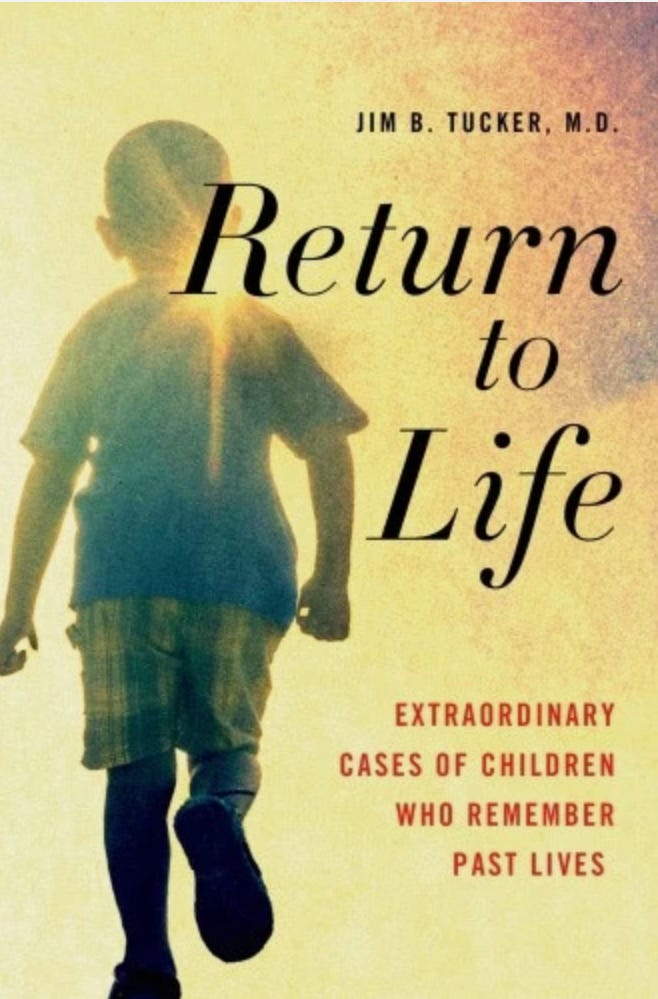
I just finished a book called Return to Life by a man named Jim Tucker. There is a research tradition of past lives centered at the University of Virginia’s Division of Perceptual Studies. It started with an academic named Ian Stevenson who studied children believed to have had past lives, and was continued by Jim Tucker after Stevenson’s death. The core claim in this literature is that some child cases are, in the authors’ view, difficult to explain fully by conventional mechanisms such as chance, fraud, fantasy, suggestion, or cryptomnesia.
In cases typically involving children as young as 2-3 and stopping around 6-7 years of age (although the oldest study featured someone who was 19 years old), children often describe recent, ordinary lives with an emphasis on how they died. Their confounded parents speak with doctors, some of whom direct them to institutions like University of Virginia to join ongoing studies. In the book, academicians would often link together clues from the baby/toddler’s recollections and FIND family members of the deceased individual. The controversial work includes cases in India, Sri Lanka, Lebanon, Turkey, Thailand, Burma/Myanmar, the U.S., Europe, Brazil, and Alaska/Tlingit communities. Some of these children are born with birthmarks or defects that line up with wounds the remembered person died from. A child with malformed fingers would talk about a man whose fingers were severed. Many of them also carry phobias that match the death. A fear of water in a child who describes drowning, before anyone told the child a story about water.
The research in this book is decidedly the wildest thing I have read in a long time. I am a skeptic by temperament and by trade. Part of my job as a novelist is observing people, attempting to learn and memorize their instincts in service of characters I write, even those instincts in the darkest corners of their personalities. But I find that, the more cynical I become, the more I believe in the impossible, the more I am certain of our smallness and the limits of our intellect.
Our wildest dreams have a point. We’re in an age of knowledge that bends our understanding of reality, of futures, of self. In many ways speculative fiction exposes me. Fiction has only been my way of circling what I am afraid to say outright: that I believe reality may be far stranger, and even more fantastic than what we’ve been raised to believe.