


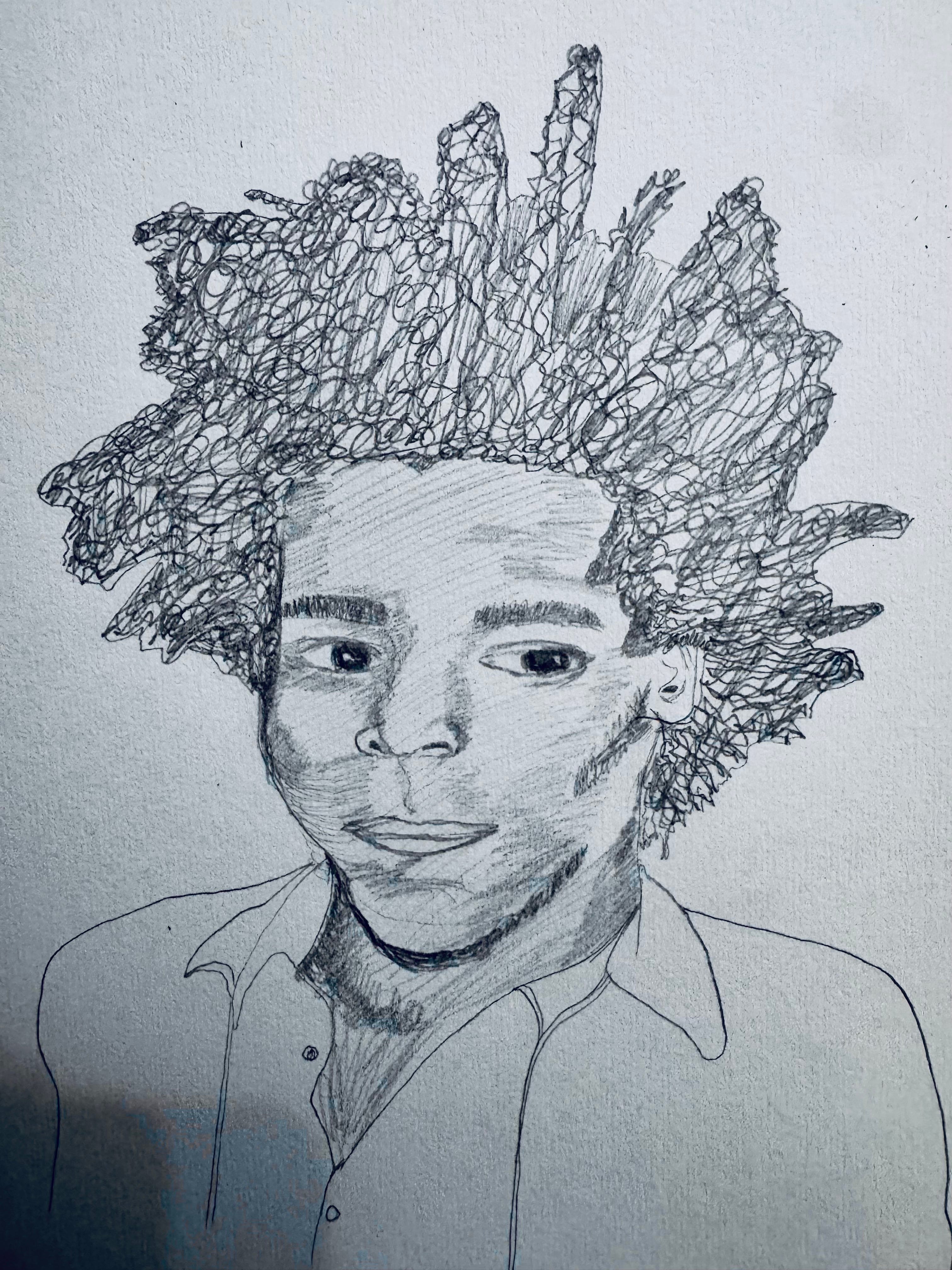
Last week, I saw a video on Instagram of a young Jean-Michel Basquiat exploring the avenues of New York City. He occasionally stops to spray paint walls, smoke, ponder, pose. The short video was superimposed with the following text: “IMAGINE TELLING HIM HE NEEDS TO MAKE SHORT FORM TEXT TO ENGAGE THE ALGORITHM.”
The suggestion is overconfident: that artists like Basquiat and perhaps his peers would not have made use of social media, when the very video that was circulating was the result of him allowing someone to follow him around with a recorder then releasing the short clips (short form content).
There’s growing angst among writers about having to bolster our social media presence as a means of selling books in a declining market. Yet artists working in less visible mediums like writing, painting, visual arts, and, to some extent, theater, have always relied on social networks to navigate the intersection of art and commerce. It’s just that these networks were not the digital platforms we use now but rather literal, in-person communities which were creative incubators and mechanisms for visibility.

Basquiat would take these short films and show/distribute among his friends, also high-profile artists, at their studios and parties. Artists who were business-minded often incorporated these communities into their professional strategies. There was a compounded privilege of proximity to other creators to generate buzz and, ultimately, to reach audiences. In the 1980s, visual artists like Basquiat thrived in a vibrant, interconnected scene in New York City, where the lines between socializing, collaboration, and self-promotion blurred.
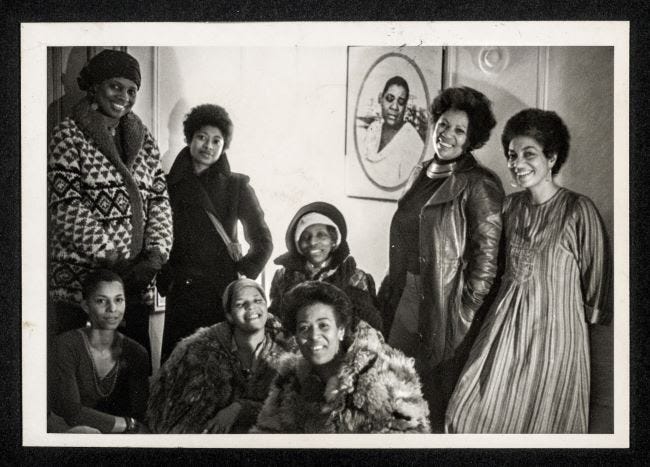
Even Toni Morrison, whose work is often seen as transcending commercial literature, was part of a group called The Sisterhood in the late 1970s, which included luminaries like June Jordan, Alice Walker, and Audre Lorde. Cortney Thorsson recently wrote a book, published by Columbia University Press, about this network. These women were not only friends but also collaborators and mutual supporters, creating a community that was integral to their visibility in the literary world and also influential in reshaping America’s cultural landscape.
Another iconic example of this dynamic might be the 1920s Parisian expatriate scene, where writers like Ernest Hemingway, Gertrude Stein, and F. Scott Fitzgerald gathered in cafés and bars, their personal dramas, toxic relationships and intellectual debates fueling both their art and their public personas. Even conflicts, such as Ralph Ellison and Richard Wright’s famous argument over Native Son, where Ellison critiqued Wright’s portrayal of Black characters as one-dimensional, took place within these social spaces. These interactions were generative, creating a cultural buzz that extended beyond their immediate circles to influence broader audiences.
Community was not just a backdrop to artistic production but a vital part of the business of art. For artists in quieter mediums, whose work does not inherently demand public visibility in the way that acting or music might, the social networks provided a way to bridge the gap between creation and audience.
The disconnect now is that the rise of social media has introduced a paradox for writers. While platforms like Instagram, Twitter, and TikTok offer opportunities to connect with readers, they are, by design, individualistic. Unlike our predecessors, the emphasis on personal branding and self-promotion often runs counter to the collaborative ethos that was once so popular in our industry. Writers are now encouraged to create content to engage with readers and market their books, but this process is often solitary, exacerbating the inherent loneliness of writing itself, a discipline that already demands long hours of isolation to produce work. For many, this isolation has led to burnout and disengagement. And who can blame those who have tapped out?
I am still figuring out how I want to exist in the commercial literary world. The idea of creating/pushing a brand (Afrocentrism? History? Art & Motherhood? Fashion/Lifestyle?) as a means of connecting with readers equally inspires and terrifies me. I’m not sure what to think when those within the literary industry suggest that social media is something we, unfortunately, no longer have a choice to engage. Only time will tell. I was talking to an uncle about this recently and he said: “Wait, social media annoys you? You don’t want to sell your books? Keep a journal.”
Love your drawing of Basquiat! My struggle is that because I meet everyone online, almost none the likeminded writers in my life are within close range. I once organized a Discord salon modeled after The Sisterhood, but engagement gradually waned in a way I blame entirely on all of us being in different states/time zones.
It's the double-edged sword of the internet— geography is no longer a barrier to entry for creative and intellectual spaces, but it doesn't lend the same support it once did, either. Artist meccas helped cultivate the scenes and eras you mentioned that we look back on so fondly, and I would love to experience more of a balance
I love how you’ve discussed the ways artists and thinkers have engaged and thrived within communities, those we can absolutely describe as social networks. There is a large distinction between the sites of interaction you so beautifully depict and these digital versions, however. These social media are owned, managed, and devised by large corporations with the agenda to make money and to use that money to establish political dominance and fascism or at least oligarchal rule. I’m not sure they can be compared because, though they seem like socia activities on the surface, the proprietors of the establishments and institutions of the Bloomsbury group and the expat communities and the New York scene, were often operating at losses and for the benefit of artistic achievement. The social media of today are using our labor for their profit alone, and the small payoffs some users get are merely a side effect. I think your hesitation to engage with social media as an influencer might have more to do with the form of capitalism under which we are forced to agree to rather than wanting to engage with a community of artists and their audience(s).